
Mansoor Ijaz, the man who has triggered off a political crisis in Pakistan, is a 'dubious character,' who is sowing 'seeds of dissension,' South Asia experts in the US tell Aziz Haniffa in Washington, DC.
'Washington is well aware that the Haqqani group was responsible for terrorist attacks on the Indian diplomatic establishments in Afghanistan.' 'But today US self-interest dictates that Sirajuddin Haqqani's mainstreaming in Afghan political life and a potential elevation eventually to a leadership role at the national level is useful and necessary, since he can deliver peace,' notes Ambassador M K Bhadrakumar.
Husain Haqqani, Pakistan's ambassador to Washington, has been summoned to Islamabad following reports that he sought United States help to rein in the country's powerful generals in the wake of the raid that killed Al QaeOsama bin Laden. He has offered his resignation to defuse a growing controversy at home that threatens to aggravate already precarious relations between Pakistan's military and its government.
In the wake of mounting reports about Pakistan's commitment to fighting terrorism despite American military and economic largesse and credible intelligence of Islamabad's perfidy in maintaining links with militant groups in Afghanistan, Pakistan's ambassador to the US Hussain Haqqani argued that the number of Pakistani soldiers killed in fighting militants should silence these critics.
Providing military assistance in the hope that it will change Pakistan's worldview is wrong, says erstwhile ambassador to the United States Husain Haqqani
Pakistan's Ambassador to the US, Husain Haqqani has taken strong exception to the contention that President Barack Obama's recent visit to India clearly indicates that while the United States seeks a long-term strategic partnership with Delhi, Pakistan to is nothing but a short-term strategic convenience to Washington.
In an unusual remark, Pakistan's Ambassador to the United States Hussain Haqqani has said that one of the reasons for recent devastating floods in his country could be human activity on the heavily-militarised Siachen glacier.
On the eve of the second anniversary of the horrific 26/11 Mumbai terror attacks, Pakistan's Ambassador to the US, Husain Haqqani has said the alleged perpetrators and conspirators of this attack on trial in Pakistan can only be convicted if India provides evidence to the Pakistani authorities.
Pakistan's Ambassador to the US Hussain Haqqani has rebutted fears about a coup in Pakistan following the Supreme Court's verdict declaring the National Reconciliation Ordinance as "unconstitutional".
Pakistan's Ambassador to the US, Husain Haqqani has said that the founder of Pakistan, Mohamed Ali Jinnah had hoped that India-Pakistan relations would be like the cordial US-Canada relations, and also had hankered nostalgically to return one day to his beloved Mumbai.

'The narrative of patriotism has been framed around the army and competing worldviews about Pakistan and those who do not fit the army's parameters are ostracised as rebellious, treasonous, and even blasphemous'
Pakistan's ambassador to the United States Hussain Haqqani's days in office may well be numbered, as experts believe that the powerful military is hell-bent upon his removal, which may ultimately be targeted at the downfall of the civilian government, which is already under severe threat.While Haqqani has rebuked reports about his removal, which seemed evident primarily due to his questionable involvement in the adaptation of some the harsh conditions in the Kerry Lugar Bill.
Pakistan's ambassador to the United States Husain Haqqani has said that Islamabad is worried by the strengthening Indo-US ties.Describing Indo-US ties as 'robust' and 'multifaceted', Haqqani pointed out that strong ties between India and the US is one of the biggest causes of worries for Islamabad. Pakistan is wary of the Indo-US relationship, which is robust and multifaceted, and the US would have to treat Pakistan at par to win over Pakistani trust.
US Defense Secretary Robert Gates has refuted the whining of Pakistan's Ambassador to the US, Husain Haqqani who had contended in a recent article in the Wall Street Journal that the main reason Pakistan's counter-insurgency efforts this far against the Taliban and other extremist groups was because it had not been provided with proper equipment --attack helicopters and night visions goggles -- by the United States as promised.
"We have to largely depend upon the US for our defence related matters. India is our main concern, as it is buying weapons worth $100 billion from five countries, including China, and to balance it our relations with the US are very significant," The Dawn quoted Haqqani as saying.

When then ISI director Lieutenant General Ahmad Shuja Pasha visited Washington, DC for a meeting with CIA Director Michael Hayden, he admitted that the planners of the Mumbai attacks included some 'retired Pakistani officers' and that the attackers had 'ISI links, but this had not been an authorised ISI operation.'
Pakistan is trying to dissipate the anger and concern in Congressional circles and among the public at large on this score that Pakistan is not being wholly cooperative, acknowledged that "given the history of India-Pakistan relations, you will have some sort of backward and forward movement.
It was both a defiant and defensive Husain Haqqani, Pakistan's Ambassador to the US, who in appearing on the Sunday news talk shows on television, and asked to explain India's accusing finger at Pakistan for the deadly terrorist attacks in Mumbai, began pointing to the 9/11 terrorist coming from countries that couldn't be held responsible for the attacks and also terrorist training camps in the United States itself.
A top Pakistani diplomat in the United States on Saturday said that Islamabad was aware that the peace deal with Taliban in the country's troubled Swat valley would not work but went ahead with it as a tactical move. Pakistan's ambassador to the US Hussain Haqqani, in a television interview, said even President Asif Ali Zardari knew about its result from the very beginning of the deal. He also said that such strategy could be repeated in the future.

'The world's patience on terrorist safe havens is running thin and that is not good for Pakistan'
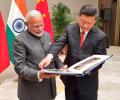
'In South Asia, unlike Southeast, East, or Central Asia, there is a natural hegemon: India. China cannot cast it aside easily'

United States President Donald Trump remarks on Monday that Prime Minister Narendra Modi sought his mediation on the Kashmir issue will "damage" the Indo-US relations, ex-diplomats said.
'Pakistan's leaders have made a serious mistake in describing India as an existential threat and a permanent enemy. If there are no permanent friends or permanent enemies in international relations, then neither Afghanistan nor India should be Pakistan's permanent enemies either,' Husain Haqqani, former Pakistani ambassador envoy to the United States, tells Rediff.com's Aziz Haniffa in a fascinating interview.
Pakistan's envoy to the United States Husain Haqqani argued: "First of all, let us understand one thing -- a Pakistani court had ordered the release of Dr Khan. That does not mean that Dr Khan goes from house arrest and takes over the Pakistani nuclear programme again."

Even as there is a sense of positivity over Indo-Pak ties after the outcome of Pakistan polls, a former Pakistani diplomat believes a regime change is unlikely to bring any substantial shift in Islamabad's approach.
International diplomats condemned the assassination of Salmaan Taseer, governor of Pakistan's powerful Punjab province and a key aide of President Asif Ali Zardari.
Pakistan on Wednesday named former federal minister Sherry Rehman, a close aide of slain ex-premier Benazir Bhutto, as its new envoy to the United States following the resignation of Ambassador Husain Haqqani over the 'Memogate' controversy.
The Biden administration expects the Modi government to continue to remain as its loyal camp follower even as Washington continues to act in self-interests, observes Ambassador M K Bhadrakumar.
A nine-judge bench headed by Chief Justice Iftikhar Chaudhry also lifted a foreign travel ban on Pakistan's former ambassador to the US, Husain Haqqani, who had resigned after the scandal became public.

A former top envoy of the country questioned Pakistan's decades-old Kashmir policy.

The Taliban's main challenge comes on the financial and economic front and there Pakistan doesn't have the capacity to be of any meaningful help, observes Ambassador M K Bhadrakumar.
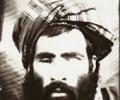
Elusive Taliban leader Mullah Omar, one of the world's most wanted terrorists, was treated in a Karachi hospital with the help of Pakistan's spy agency Inter Services Intelligence after he suffered a heart attack, a private intelligence agency has claimed.

Pakistan may appoint Foreign Secretary Salman Bashir as its next High Commissioner to India to replace current incumbent Shahid Malik, whose term is set to end in June.
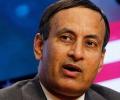
Amid a controversy around Pakistani diplomat Hussain Haqqani, news reports said he was seeking asylum in the United States, but the envoy denied this and said he would return to his country shortly to explain his position on a secret memo purportedly sent by President Asif Ali Zardari to the Obama administration.
The US intelligence community has begun to look for linguists and analysts from the Pakistani-American community to meet its national security challenges, especially after Pakistani Americans were in Pakistan trying to join Al Qaeda.Pakistan is often viewed as the epicentre of international terrorism.
Pakistan's Ambassador to the United States Husain Haqqani has called the leak of classified United States military documents on the Afghan war as 'irresponsible', and insisted that his nation was fully committed to fighting terror groups.Whistle-blower organisation WikiLeaks has released over 90,000 documents called the 'Afghan War Diaries, 2004-2010', which prove fears that Pakistan is aiding the Taliban to organise networks of militant groups that fight against America.
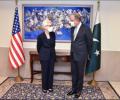
Russia and China are tight-fisted and Iran is broke and none of them has the political will or capacity to bankroll the Afghan economy, which only the US can, points out Ambassador M K Bhadrakumar.

United States President Barack Obama secretly offered Pakistan in 2009 that he would nudge India towards negotiations on Kashmir in lieu of it ending support to terrorist groups like Lashkar-e-Tayiba and Taliban, but much to his disappointment Islamabad rejected the offer.
Jones and Panetta bear the same message that US Secretary of State Hillary Clinton sounded a few days ago. Clinton had said that Pakistan would have to face very serious consequences if an attack on the US, which was planned in Pakistan, had succeeded. To avoid coming down heavily on Pakistan, the US has offered to cooperate with them to eliminate such threats.
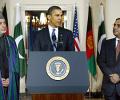
'The real purpose of President Obama writing to President Zardari,' Husain Haqqani tells Rediff.com's Aziz Haniffa, 'was to seek a turnaround on terrorism -- that Pakistan, whatever its grievances, cannot have jihadi groups operating openly on its soil.'
